Assalamu’alaikum Warahmatullahi Wabarakatuh
Bismillahir-Rahmanir- Rahim
1. Introduction
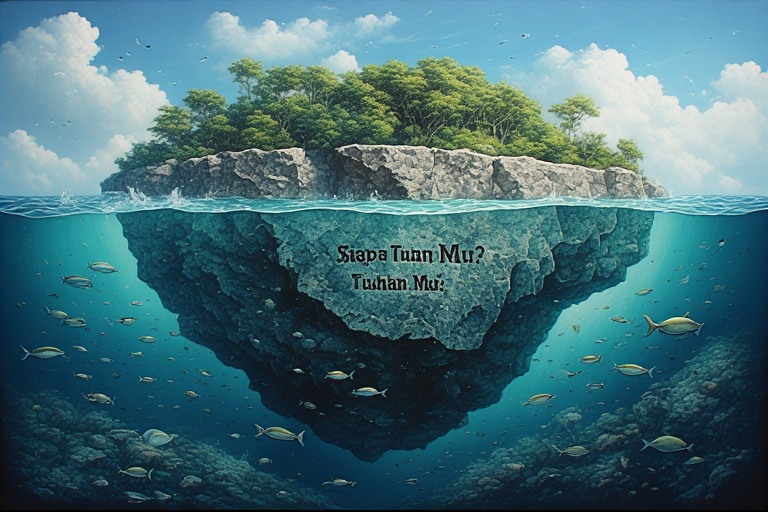
In terms of literacy and cognitive psychology, a story whose details are omitted—such as names of figures or specific locations—aims to create a universality effect. If the Qur’an mentioned GPS coordinates or the full names of figures in detail, our brains would tend to categorize it as a “historical archive” that is already finished. But by removing those details, the Qur’an compels our souls to engage in self-projection. Scientifically, this keeps the message relevant across all eras—archtypical—because what is being discussed is no longer “so-and-so,” but human behavior that can occur in anyone, including us.
2. Qur’anic and Hadith Evidence
فَٱقْصُصِ ٱلْقَصَصَ لَعَلَّهُمْ يَتَفَكَّرُونَ
“So relate the stories that perhaps they will reflect.” (QS. Al-A‘raf: 176)
نَحْنُ نَقُصُّ عَلَيْكَ أَحْسَنَ الْقَصَصِ بِمَا أَوْحَيْنَا إِلَيْكَ هَٰذَا الْقُرْآنَ
“We relate to you, [O Muhammad], the best of stories in what We have revealed to you of this Qur’an…” (QS. Yusuf: 3)
3. Lessons and Message
The greatest wisdom behind the omission of detail in the Qur’anic stories is so that we focus on character and lessons—_ibrah_—not on historical statistics. When Allah speaks of a person who was given His verses but then detached himself from them, it is a warning for every scholar or person of knowledge in any era. The moral message: Do not feel safe with your knowledge, because the type of person who turns away from truth will always exist in every age. Have you ever seen someone with immense power, yet he used that power to serve the weakest people—exactly like the leadership pattern of Dhul-Qarnayn? There is the story of a regional leader who disguised himself as an ordinary citizen to provide clean water access to a remote village without wanting his name carved on an inscription. When asked why he was so sincere, he answered, “I am only afraid of becoming the model of a person Allah describes as a betrayer of trust.” He did not see Dhul-Qarnayn as an ancient figure, but as a standard of conduct he had to emulate today. The stories in the Qur’an are like a “Magic Mirror.” If the mirror had a frame full of ornaments—historical details—we might be busy admiring only its frame. But Allah gives us a clear, wide mirror without a distracting frame, so that every time we stand before it, we do not see someone else; we see our own reflection. Are we becoming a reflection of the righteous, or are we becoming a reflection of the rebellious? Sometimes we are funny. When reading the story of Ashabul Kahfi, some people argue until the veins in their necks bulge just to debate what breed the dog was or the color of its fur. Yet Allah did not mention those details so we wouldn’t be busy looking for that breed in a pet store! What Allah wants is for us to learn how those youths guarded their faith amid a corrupt environment. Don’t let us finish researching the color of the dog’s fur, but forget to emulate the faith of its masters!
4. Conclusion
My brothers and sisters, the Qur’an is not a rigid history book, but living guidance. Allah removed the details of names and places so that the stories become eternal “human patterns.” Let us stop tampering with Allah’s guidance by asking unnecessary details. Instead, let us ask ourselves: “Of all the stories in the Qur’an, which human model am I playing right now?
والله أعلم بالصواب
الحمد لله رب العالمين
Wassalamu’alaikum Warahmaullahi Wabarakatuh.
ِAbu Sultan Al-Qadrie